What are you waiting for?

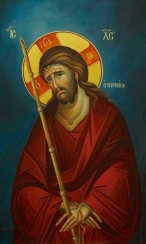
Christs MercyMatthew 7:15-21

15 “Watch out for false prophets. They come to you in sheep’s clothing, but inwardly they are ferocious wolves. 16 By their fruit you will recognize them. Do people pick grapes from thornbushes, or figs from thistles? 17 Likewise, every good tree bears good fruit, but a bad tree bears bad fruit. 18 A good tree cannot bear bad fruit, and a bad tree cannot bear good fruit. 19 Every tree that does not bear good fruit is cut down and thrown into the fire. 20Thus, by their fruit you will recognize them.  21 “Not everyone who says to me, ‘Lord, Lord,’ will enter the kingdom of heaven, but only the one who does the will of my Father who is in heaven.

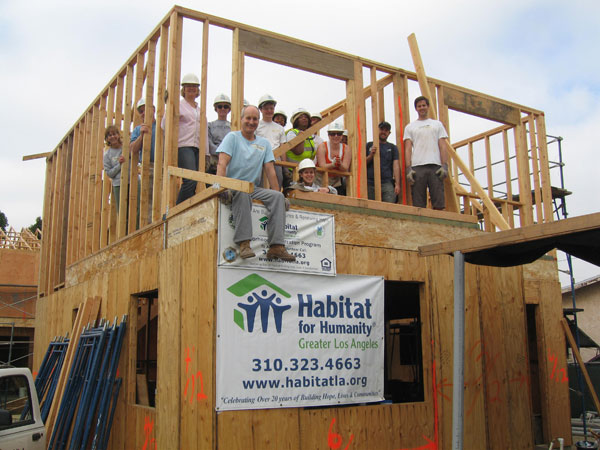
What Jesus focuses on is that there are trees that bear good fruit and bad fruit… people that do good works and those who do not provide of their Time, Talents and Treasures or even do bad works. They key to Salvation is “doing the will of the Father who is in heaven” and this is done through our Stewardship. We find many examples in the Bible where we experience Stewardship …the widow and the three mites… the good Samaritan, and others. In God’s eyes, it doesn’t take much but the focus is on doing - getting involved, volunteering, donating clothing, providing a meal for a homeless person, creating a care package for the military, participating in summer youth programs and supporting your Church with your financial commitment.  What a wonderful opportunity to focus on our Stewardship, especially with summer around the corner. The key is not to wait but to start now! 

Suddenly the Judge shall come, and the deeds of each shall be revealed: but with fear we cry out in the middle of the night: Holy, holy, holy are thou O God. Through the Theotokos have mercy on us.

Posted in Uncategorized | Leave a comment

Christian Stewardship of Our Baptism–Our own participation in Christ’s Resurrection!

Hristos Voskrese! Christ is Risen! Hristos Anesti!

“Do you not know that all of us who have been baptized into Christ Jesus were
baptized into his death? We were buried therefore with him by baptism into
death, so that as Christ was raised from the dead by the glory of the Father, we
too might walk in newness of life. For if we have been united with him in a death
like his, we shall certainly be united with him in a resurrection like his. We know
that our old self was crucified with him so that the sinful body might be destroyed,
and we might no longer be enslaved to sin. For he who has died is freed from
sin. But if we have died with Christ, we believe that we shall also live with him.
For we know that Christ being raised from the dead will never die again; death
no longer has dominion over him. The death he died he died to sin, once for all,
but the life he lives he lives to God. So you also must consider yourselves dead to
sin and alive to God in Christ Jesus” (Romans 6: 3-11).

St. Paul reminds us, in this Epistle to the Romans, that there is only one way to
live: in Christ Jesus. One might even say there is only one way to be human: in
Christ Jesus! So often, we think of this miracle of Christ’s trampling down death
by death for creation as a way for us to continue living as we are forever… That
we should not have to change at all, but only through a profession of “belief”
might be able to do whatever we want, believe whatever we want—and have a
“get out of jail free” card at the Last Judgment. It’s an interesting thought…but
it’s not what Jesus Christ taught.

resurrection2

This epistle read at every single Baptism reminds us of Christ’s teaching that we are to be born of “water and the Spirit”. This “birth” is into a new life—not the same old one. This “birth” only occurs after a death to self, and is into our true humanity. This “birth” is only fulfilled and completed with our physical death—our own Passover from death to life. So, what does it mean to be truly human?

In order to understand what it means to be truly human, one must understand that a human being must be able to be in communion with God. True humanity is only possible in a relationship with God where the human being unites his/her will to God’s will. Thus, when Christ bows His head on the cross and says, “It is finished,” and gives up the spirit, the human being is created for the first time.

His Resurrection inaugurates the first day of the new creation. Since there is only
one human being who does this, it is only possible for us to be human if we make
ourselves a part of Him. It is for this reason that we are called into this wondrous
and life-giving relationship through Holy Communion in Christ Jesus. When we
partake of Christ, we become His Body, and we become truly human!

We are called to live this resurrected life in Communion every day, in every
situation. We must continuously strive for ways to care for this holy relationship
with God initiated by our baptism. We must deny ourselves, take up our cross
daily, and follow Christ. So, how do we exercise good stewardship of our baptism—
our own personal connection with Christ’s saving death and Resurrection? We
must choose whether to live our lives for the immediacy of passing pleasure (so
prevalent in today’s society), or to live for the lasting and eternal joy of being truly
human in Christ.

We must choose how we prioritize our lives. If we are living for eternal joy, are
we going to sleep in on a Sunday morning, because we have worked so hard all
week, or are we going to wake up, bring our thanksgiving offering to God for
all that He has done, and be joined to Christ in the Holy Eucharist? If we are
living our lives for eternal joy, are we going to defray attention from ourselves by
judging our brothers and sisters who have offended us, or are we going to examine
ourselves and our own sinfulness, and beg for forgiveness and come to back to
Christ in Holy Repentance? If we are living for eternal joy, are we husbands
going to demand the submission of our wives to our judgment, or are we going to
sacrifice ourselves for them, just as Christ did for His Bride, the Church? If we are
living for eternal joy, are we wives going to reject the headship of our husbands,
or are we going to submit to them out of reverence for Christ? If we are living for
eternal joy, are we going to teach our children that it is more important to play
for a traveling sports team on Sunday mornings, or are we going to teach them
that nothing is more important than our relationship with Christ?

DSC_0527

How we care for our baptism—our personal connection with Christ, and our initiation into becomin

g truly human beings—is the most important choice we have as Orthodox Christians. Do we choose to be dead to sin and alive to God in 

Christ Jesus? The choice, my dear brothers and sisters, is ours.

May the Light and Love of the Risen Lord bring us all great Joy in this Pascha season, and throughout all of our lives. May His Word become alive in us, enabling us to become truly human in Him. And may it shine through us to enlighten and enliven the world!

Hristos Voskrese! Christ is Risen! Hristos Vaskrse!

Posted in Uncategorized | Leave a comment

Take five minutes to think about what Christ did for us….

Women at the tombA reflection from a parishioner…
As I watched a DVD that depicted the life of Christ with my daughter, we discussed how we can always read Scriptures, but sometimes, it has a greater impact when we actually see what happens. The series depicted Christ’s life and what we discussed was how Thomas, one of His disciples, always doubted everything. My thoughts immediately turned to Stewardship, and how we, as Orthodox faithful, doubt Stewardship as well. In the context of Holy Week, the Passion Gospels, Christ’s crucifixion, His death and Resurrection…. all that Christ was put through, for our personal Salvation, all that Christ experienced, for our personal Salvation, the pain and suffering, for our personal Salvation. It brings tears to my eyes to think all that Christ did for me, my family, my opportunities and yet, I easily pay for my monthly bills without a second thought but will question when providing my Church, with Time, Talents and Treasures.

Christ Is Risen!

Posted in Uncategorized | Leave a comment

We pray you have a blessed Palm Sunday!

Palm SundayCome, O faithful, let us pass from one holy feast to another!
Let us hasten from the palms and branches to the solemn celebration of Christ’s saving Passion!
We shall see Him voluntarily suffer for our sake!
Let us offer Him a fitting hymn of thanksgiving: “Fountain of tender mercy and haven of salvation,
O Lord, glory to You!”

The Palm Sunday Evening Vesper service includes many hymns that reflect upon Christ and His entry from Palm Sunday to Holy Week. When reading the above hymn, we are drawn to the words voluntary, suffer and Salvation. Jesus Christ died for our sins – He died on the Cross for our Salvation. He did this voluntarily and suffered for all the sins that were committed in this world. Why, then, do we question Stewardship or the care and support of our Church when we so visibly can see what Christ went through for us? Do we voluntarily give of our Time, Talents and Treasures? Do we suffer to help our parish like Christ suffered? Do we reflect upon our own Salvation and the fact that we will be judged by Jesus based upon our works and what we have done with what God has provided for us?

By His stripes, we are healed!

Posted in Uncategorized | Leave a comment

The Fourth Sunday of Great Lent

This Sunday, the fourth Sunday of Great Lent, we reflect upon the teachings of St. John The LadderClimacus or St. John of the Ladder. In his famous work known as The Ladder of Divine Ascent, St. John writes how our life can be perfected in a union with Christ. He illustrates 30 steps that are necessary to reach Jesus and the Kingdom of God. Through these steps, we make changes in our lives that help us to become Christ-like, to experience Orthodox Christian perfection which is to live just as Jesus did.

At work or school, everyone discusses the newest and latest self-help books… identifying ways in which you can grow rich, put your kids through college, make thousands of dollars working at home or investment in real estate by flipping homes. However, one of the only books that identifies our daily struggle for our personal salvation is the Ladder of Divine Ascent. The common theme we have heard throughout Lent is that we will be judged by our works. As we pass the mid point of Great Lent, let us refocus our Stewardship efforts on our Time, Talents and Treasures. Pray and consider how we can make a difference and let’s remember St. John’s guidance that we “live just as Jesus did” and exercise all of the gifts that God has provided to us.

Posted in Uncategorized | Leave a comment

Orthodox Christian Stewardship of Fasting

We have entered the course of the Great Fast, a period of preparation for our Lord’s Pascha. This wonderful and glorious time of preparation is offered by the Church for the up-building and edification of all faithful. Yet, so often we look upon this time with disdain and chagrin. We are extremely reluctant in our present day and age to allow anyone else to determine what we are to do in our daily lives — and yet this is exactly what the church offers for us during the Great Fast.  Throughout the course of this blog, we have examined that the very nature of living a life of Christian Stewardship is something that is all encompassing.  This week, we will take some time to consider how we may become good Stewards of the spiritual Gift of Fasting.

Prior to doing this, it is important to review the meaning of this oft misunderstood word.  “Fasting” in its proper sense, is the abstinence from food—a detachment of the self from earthly realities and goods.  Yet, St. Basil the Great reminds us, “fasting is not just the abstaining from food only; it is first of all, abstaining from sin” (On Fasting, Homily I).  Fasting is prescribed as an ascetical effort helping us to deny our own will and unite our will to God.  It is for this reason that St. Basil reminds us, “Be of good cheer, for the physician has given you medicine that destroys sin” (Homily I).  Just as chemotherapy destroys cancerous cells—so proper fasting destroys the cancer of sin in the hearts of us all.

The benefits of fasting are innumerable. Just as a heavily laden eighteen-wheeled truck takes longer to slow down and is less maneuverable than a sports car, so too are our wills when our stomachs are weighed down with heavy and fatty food.  It is so much harder to resist temptation when we are not fasting.  And in today’s “modern” and “scientific” age, we are discovering that there are increasingly more health risks with heavy consumption of meat and dairy.  That doesn’t mean that we should never eat meat—there is a time for feasting as well.  However, the common understanding of “absence makes the heart grow fonder” holds true in this case.  Think of the joyous and festal celebration accompanying that first agape meal on Pascha!  So, how do we become good Stewards of the Fast?

The Gift of Fasting should first be thought of as exactly that:  a GIFT!  Our Lord hasChrist's Temptation in the Wilderness, Montreal prescribed this wonderfully potent spiritual medicine so that we might unite our will to His will—thus participating in the energies of God.  In fact, He demonstrated its potency with His perfect fast in the wilderness!  St. Basil reminds us that this gift enables other spiritual gifts:

“Fasting gives birth to prophets and strengthens the powerful; fasting makes lawgivers wise.  Fasting is a good safeguard for the soul, a steadfast companion for the body, a weapon for the valiant, and a gymnasium for athletes.  Fasting repels temptations, anoints unto piety; it is the comrade of watchfulness and the artificer of chastity.  In war it fights bravely, in peace it teaches stillness…” (On Fasting, Homily I).

The words of the serpent, which proved so perilous to Adam, transformed through deception the understanding that Fasting is truly the Gift of God.  Because of this suggestion, Adam chose to perceive the command of not eating as a burden.  So it is with us all.  We constantly view the Fast as a burden imposed by uncaring monastics.  We need to be reminded that fasting itself comes from God—to strengthen us.  To break this idea of fasting as burden (and become good Stewards of this Gift), we should consider our priorities.  Do we value the pleasure of our stomachs more than the care of our soul?  One is eternal—the other is not.  “For satiety brings delight to the stomach, whereas fasting brings profit to the soul” (On Fasting, Homily I). 

Once our perspective changes from burden to Gift of God, how do we care for this potent gift?  First of all, as our Lord reminds us:  “And when you fast, do not look dismal, like the hypocrites, for they disfigure their faces that their fasting may be seen by men. Truly, I say to you, they have received their reward” (Matthew 6:16).  We shouldn’t let others know of our fast and look dismal (or disfigure our faces).  The face is disfigured when our inner disposition is hidden by a false external appearance—just like an actor on the big screen.  We should not seek to change our appearance to make us seem holier than we are.  We should come to God (and one another) honestly.  We should approach and endure the Fast with joy.

Orthodox CandlesJoyful fasting is accompanied by continuous repentance.  It becomes a daily washing of the soul which finds its fulfillment in the celebration of the Holy Mysteries of Repentance and the Eucharist.  Joyful fasting permeates our prayer life—strengthening it and lifting us up so that the Holy Spirit within us may speak to God.  Joyful fasting destroys the shame of our sinfulness—allowing us, like the Prodigal, to come to our senses and return home to God.  Joyful fasting softens our hearts so that they may be made more pliable in God’s loving and compassionate hands.  Joyful fasting inspires compassion and love of neighbor.  Joyful fasting helps to unite us to God in preparing a place for His Son within each of us.

The Joyful Fast is not solely defined in terms of abstinence from foods, for it is also the removal of vices and sin.  The Joyful Faster forgives his neighbor—and releases all grudges.  The Joyful Faster does not insult—nor does he harbor anger in his heart.  Rather, the Joyful Faster becomes the calm haven of Christ, permeated with His Peace.

As we endeavor to complete this second week of the Great Fast, may our Lord, who brings us to this season for our own salvation, grant us the strength and endurance to complete the course of this Gift of the Fast as Good Stewards, enabling us to receive this spiritual medicine with great joy while we struggle to unite our will to His Will!

Posted in Uncategorized | Leave a comment

Preparing for Great Lent and the Fast – not just abstinence but works!

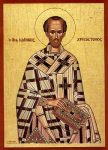
Sunday_of_OrthodoxySt. John Chrysostom… I have said these things, not that we may disparage fasting, but that we may honor fasting; for the honor of fasting consists not in abstinence from food, but in withdrawing from sinful practices; since he who limits his fasting only to an abstinence from meats, is one who especially disparages it.

Dost thou fast? Give me proof of it by thy works!

Is it said by what kind of works?

If thou seest a poor man, take pity on him!

If thou seest in enemy, be reconciled to him!

If thou seest a friend gaining honor, envy him not!

If thou seest a handsome woman, pass her by!

For let not the mouth only fast, but also the eye, and the ear, and the feet, and the hands, and all the members of our bodies.

Let the hands fast, by being pure from rapine and avarice.

Let the feet fast, by ceasing from running to the unlawful spectacles.

Let the eyes fast, being taught never to fix themselves rudely upon handsome countenances, or to busy themselves with strange beauties.

Posted in Uncategorized | Leave a comment